



Oil prices are surging, markets are anxious about inflation, and borrowing costs for Americans are climbing.
None of that has stopped Donald Trump from floating ideas in the last week that would likely exacerbate rising consumer prices: free money and lower interest rates.
Ironically, it’s a similar cocktail for hotter inflation that helped derail Joe Biden’s presidency and gave Trump a foothold in the 2024 election. One factor in the president’s victory was the message that inflation had run amok under the Democrats.
On Wednesday, the president said he would dish out $5,000 to every American citizen adult if the Republicans hold onto their majority in the Senate and the House after the November midterm elections. As there are over 240 million adult citizens in the US, such a move would be costly.
“It would cost around $1.3 trillion putting the deficit for next year at more than $3 trillion or 10% of GDP,” said Dean Baker, senior fellow at the liberal-leaning Center for Economic and Policy Research.
Last week, Trump demanded that the Fed lower interest rates following a jobs report that blew away economists’ expectations.
At a time when bond yields are already rising on concerns about deficits, debt, and more inflation that will force the Fed to hike rates, Trump’s plans could run counter to his own stated goals of making life more affordable for Americans, and economists across the political spectrum didn’t mince words on their concerns about what the proposed dividends would mean for inflation, interest rates, and the federal fiscal outlook.
“This proposal would be bad if you started from a balanced budget position, but we’re not in a balanced budget position,” said Desmond Lachman, a senior fellow at the conservative think tank American Enterprise Institute. “We’re already in a deep budget hole.”
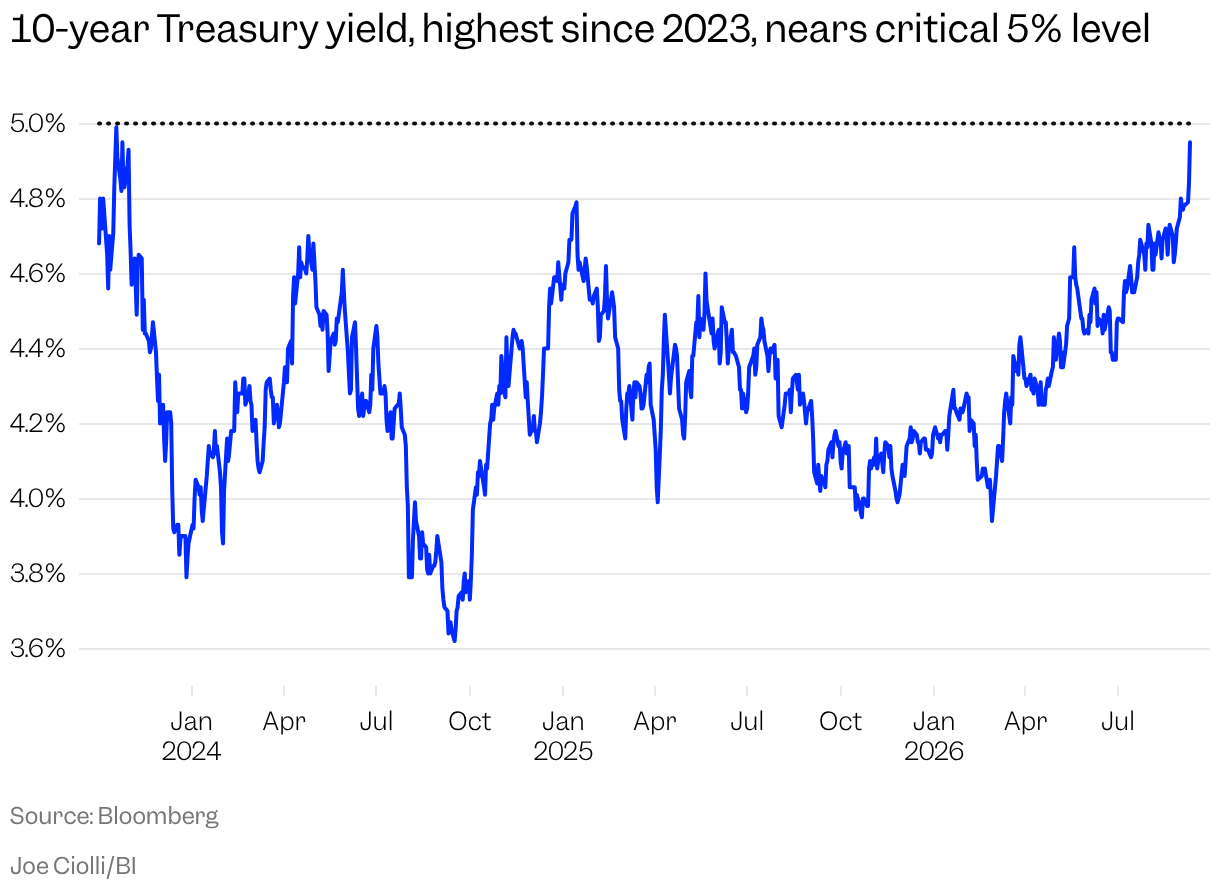
Adding more fiscal stimulus in the middle of a period of heightened inflation and low unemployment could push prices and interest rates even higher. “Debt is now as large as our entire economy, deficits are running $2 trillion per year, inflation is about 3.5%, and the 10-year Treasury yield is approaching 5%,” Maya MacGuineas, president of the fiscally hawkish Committee for a Responsible Federal Budget, said in a statement. “This half-baked political scheme would make this all worse — exploding the deficit, ginning up inflation, and further driving up the cost of borrowing throughout the economy.”
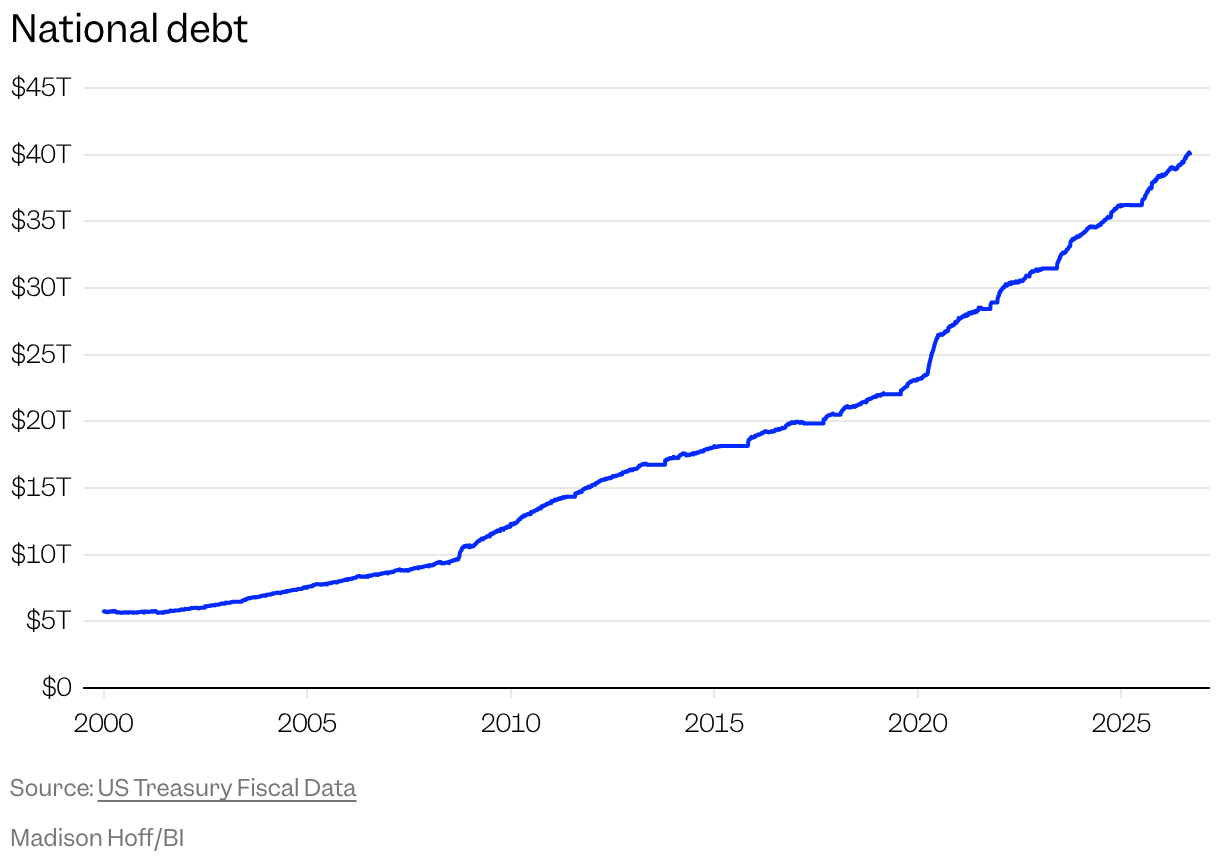
While Vice President JD Vance pointed to tariff revenues as a partial source of funding, it’s unlikely that they could cover the entire bill. “The checks would almost certainly be funded by adding to the national debt, which already stands at $300,000 for every household in the country,” said David Ditch, a policy analyst at the libertarian Cato Institute.
It’s a familiar problem for the president, who has enacted a series of policy changes that market pros and economists widely view as inflationary. So far in his presidency, those include tax cuts, tariffs, and shrinking the labor force via mass deportations.
Trump to date has promised $5,000 DOGE dividends, $2,000 tariff rebates, and on Thursday announced $500 to Americans the administration says were overcharged for insurance obtained through the Affordable Care Act.
Bobby Kogan, the senior director of federal budget policy at the liberal Center for American Progress, said this move would be inflationary. He doubts the checks will come to fruition, given previous ideas that haven’t happened, such as the DOGE dividends. He said if it is done via an act of Congress, “it would still leave the people whose lives were ruined under the Big Beautiful Bill significantly in the hole,” pointing to those who lost Medicaid benefits.
“The Administration has not yet released details on this policy initiative, and until it does, this discussion relies on speculation,” a White House official told Business Insider.
Investors for their part seem to be ignoring Trump’s latest idea and its potential to stoke inflation. That’s because they’re focused on the inflation that’s already in front of them. On Thursday, the Producer Price Index report for August showed wholesale prices rose 5.4% on an annual basis, slightly higher than expected.
Bond yields were also surging again as oil topped $105 for Brent and $100 for US crude. The 10-year Treasury yield rose 8 basis points to 4.92%. Rates are at their highest level since 2023, and a move to 5% would put them at levels last seen in 2007.
“Increasing demand by artificially injecting money into the economy would lead to higher prices,” Ditch said. “A significant increase in federal borrowing would put also upward pressure on interest rates, meaning higher interest payments on credit card balances, business loans, and new mortgages. Both problems would linger after the money from the checks is gone.”
