


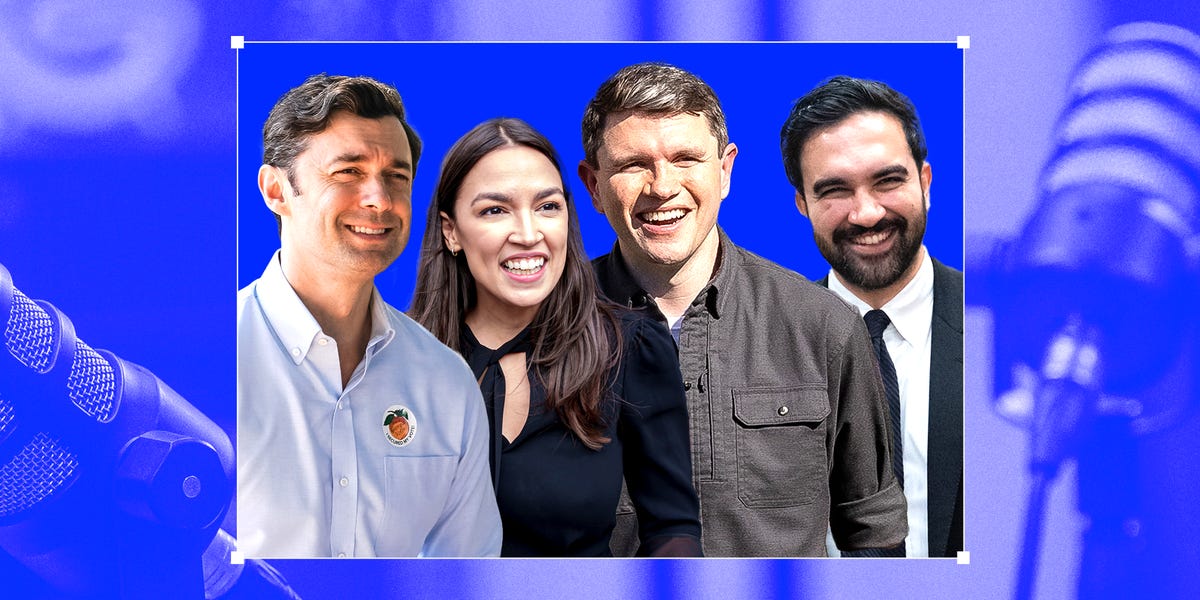
If you ask pundits, 2024 was the Podcast Election (which also means it was the YouTube Election). And maybe 2026 is the Influencer Election.
One thing the chattering class won’t call it is the Television Election — because everyone knows everyone has stopped watching TV.
Except that’s not how political campaigns are run, at all.
Even in 2026, more than 60% of the estimated $11.6 billion spent in this election cycle will go to good ol’ fashioned broadcast and cable TV. Another 20% will be spent on streaming TV.
If you think that doesn’t leave a lot of room for things where you and most people you know spend a ton of time — YouTube, Reels, TikTok, etc. — you’re right. Political pros know it, too.
So why isn’t that changing? I asked Rob Flaherty, who has spent most of his life doing digital politics for Democrats, including Hillary Clinton, Joe Biden, and, most recently, Kamala Harris.
Flaherty offered up a bunch of reasons why TV remains so dominant in political spending, even as it gets less relevant to voters.
But a base reason is simply that political operatives spent money on TV because other political operatives spend money there: Flaherty even admits that in his current work — co-running an anti-AI super PAC — he has been buying some TV time just so other people in politics will take him seriously.
You can hear our entire conversation about how campaigns work in the TikTok era — and how they ought to work — on my Channels podcast. The following is an edited excerpt of our chat.
Peter Kafka: You said that when you were working on the Harris campaign, you spent roughly 50-50 between TV and digital — but that most campaigns still spend 70% of their budget on TV. Make the best case for why a campaign should still spend half or more of its money on TV.
Rob Flaherty: Well, I would not advocate for that. But I think the steelman case that you would hear is: Digital political ad inventory is actually quite limited. There are only so many places you can spend. Social media is not a mind-changing surface; it’s a base-building surface.
Meanwhile, television is concentrating on a smaller number of higher-view surfaces. So you actually want to spend more money on TV because it’s more expensive to buy against an NFL game than it was just to buy across from the local news and in prime time.
That sounds a lot like the TV industry’s own argument for years: “Yes, ratings are down, but that means the shows people are still watching are more valuable.”
Look, this is an industry that has a nobody-ever-got-fired-for-hiring-McKinsey problem. If you do the same thing everyone else does and you lose, then you did everything right. And if you try something different and you lose, it’s you who made bad decisions.
I’ll even say candidly: I run Tomorrow Together, a new super PAC where we just launched a bunch of ads. We’re advertising against people who don’t want AI regulations. And even I — Mr. F—ing Digital — felt this pull, like I needed to have pretty significant TV spending. Because otherwise the industry won’t view it as legit, because TV is legit.
We still spent mostly on digital, largely because it’s a super PAC and we’re spending late. But I prioritized making sure we had some TV in there, because otherwise people don’t think it’s real.
And also, the way a lot of this works is: The general consultants who are the top consultants to the candidate, very often are economically tied to the margins of TV.
Spell that out. You’re running a campaign. Why do you have an economic incentive to buy TV?
Because you get a cut of the buy.
The more TV a campaign buys, the more money you make.
Basically.
Usually, the general consultant hires up all the other consultants. Those consultants get a cut, either a fee or a cut of media spend.
TV margins are great. They are really, really great. They are better than digital margins. For the consultant, you’re making 10%, 15% on a TV buy.
And by “margins,” you mean the money the person buying the ads gets from the campaign?
Yeah. You make more money because there’s just less staff time.
The other thing that’s crazy is a lot of the big TV firms don’t actually do the buying. They subcontract to one of three or four buying shops. So everybody’s just making money all over the place.
There’s a rent-seeking thing: The most senior consultants who have been around for a while came up in TV. They talk to the candidates. They push them to spend more on TV. And then you have campaign managers who are typically relatively more junior, particularly on Senate races, who don’t want to mess up.
They don’t want to do something different and radical, and they have to convince the candidate and the general consultant anyway. So you end up in this place where the easiest thing to do is just sort of the same thing.
The broader media business had the same problem: Advertisers took a long time to follow consumers to digital. They were still spending on TV when people were leaving in droves. Does politics eventually catch up?
If you talk to any politician, they would tell you digital is very important. It’s the internet. And then you look at their media mix, and it’s not that.
I do think presidential primaries are what drive innovation in politics. I do think you’re going to see some people try a bunch of new stuff, and then that will lead to a more cogent theory of how you spend more of your campaign dollars on the places where people actually are.
I’m hopeful that change is coming. But so much of the way that media gets spent is profit-seeking and rent-seeking that you do have to break through that. It has the entrenched layer of political power on top of it, and that is one of the reasons.
