


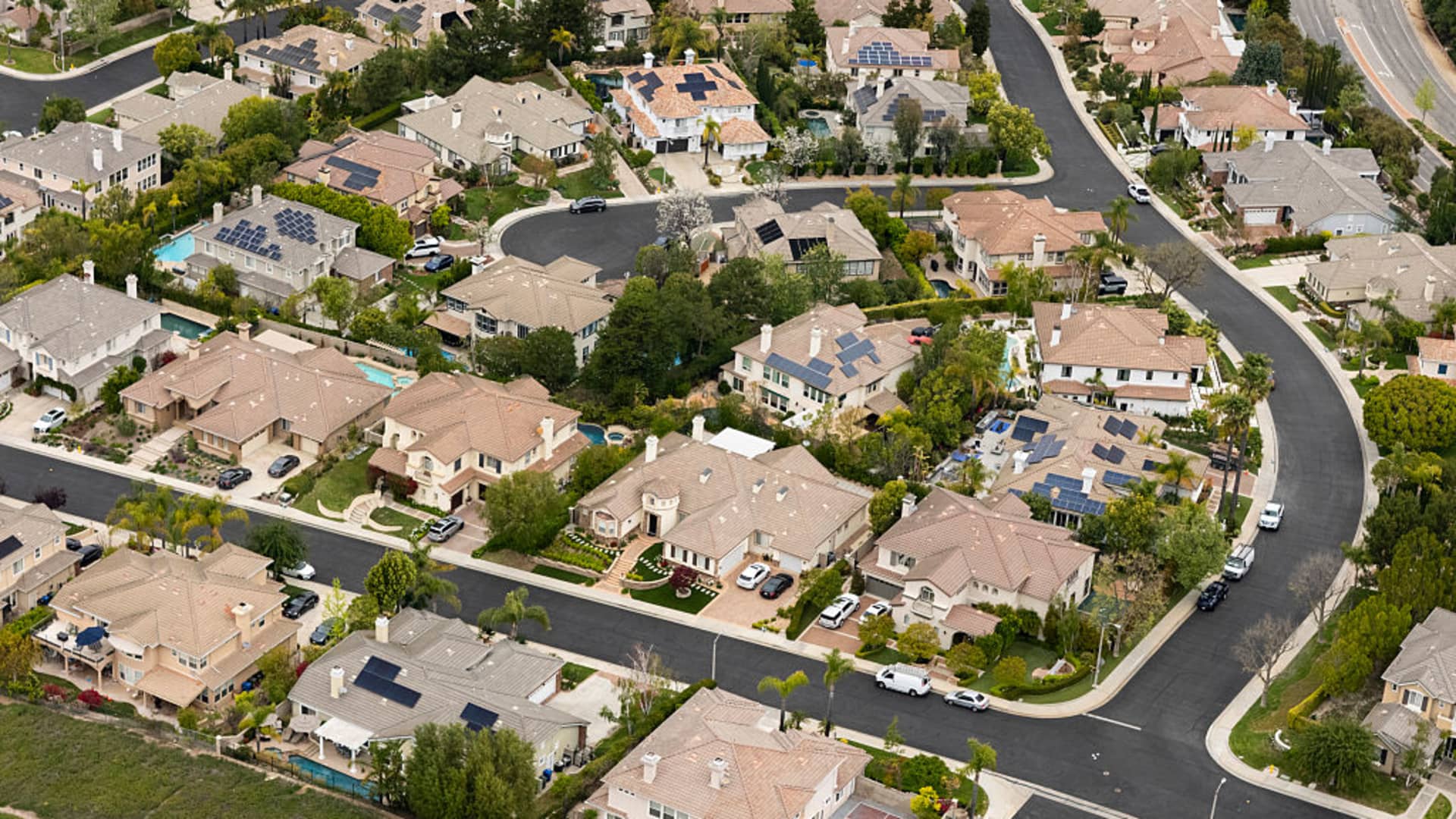
Ever since the epic run on housing in the first years of the pandemic, fueled by record-low mortgage rates, the market has been plagued by low supply and high prices.
Prices in March were 39% higher nationally than they were in March 2019, pre-pandemic, according to the S&P CoreLogic Case-Shiller Index. While prices continue to gain, the supply crunch is finally starting to ease — but not at the right price points.
Demand for housing is strong overall, but strongest on the lower, more-affordable end of the market. That segment is still desperately undersupplied. As a result, home sales in the lower and middle price tiers continue to underperform the high-end market.
A new report from the National Association of Realtors and Realtor.com breaks down affordability and supply, shedding light on exactly where the pain points are in the market. Affordability was determined by using standard underwriting guidelines for buyers using a 30-year fixed mortgage, where 30% of income is used for the monthly payment (mortgage, property tax and insurance).
For those earning between $75,000 and $100,000 annually, considered middle- to upper-middle-income buyers, the supply of homes for sale that they could afford increased the most of any income group this year from a year ago. In March 2024, 20.8% of listings were within reach for these households, and by March of this year that rose to 21.2%. But in March 2019, those same buyers could afford nearly half, or 48.8%, of all active listings.
In a so-called balanced market between buyer and seller, that group should be able to afford 48% of all listings, according to the report. Based on current inventory levels, the market would need roughly 416,000 more listings priced at or below $255,000 in order to be balanced, the study found.
For those earning below $75,000 annually, the market has become even less supplied. A homebuyer with a salary of $50,000 could afford just 8.7% of available listings in March, compared with 9.4% in March 2024 and 27.8% in March 2019.
Higher-income households have near-total access to the housing market. Homebuyers earning $250,000 or more can afford at least 80% of home listings.
“Shoppers see more homes for sale today than one year ago, and encouragingly, many of these homes have been added at moderate-income price points,” said Danielle Hale, chief economist at Realtor.com. “But as this report shows, we still don’t have an abundance of homes that are affordable to low- and moderate-income households.”
Hale added that progress in inventory hasn’t been uniform across the country, saying gains have been concentrated in the Midwest and the South.
While the report is a national snapshot, all real estate is local.
Markets in the Midwest, like Akron, Ohio; St. Louis; and Pittsburgh, are considered balanced, with enough supply to meet demand. Others have made significant strides, adding more affordable listings but still shy of meeting demand. These include Raleigh, North Carolina; Des Moines, Iowa; and Grand Rapids, Michigan.
More than 40% of the nation’s 100 largest metropolitan markets, however, are still struggling. These include Seattle and Washington, D.C. While the supply of affordable homes has increased in both markets, households still need to earn more than $150,000 a year in order to afford even half of the homes available.
Other markets that had been overheated are finally cooling off. Austin, Texas; San Francisco; and Denver have seen a substantial increase in the supply of affordable homes. They now surpass pre-pandemic levels.
“It tells us that with the right mix of new construction, market shifts, and local policy efforts, even some of the most challenging markets can start to bend toward balance,” according to the report’s authors.
And then there are markets that are just getting worse. Many of these are in Southern California, including Los Angeles and San Diego. New York City also falls into that category. The report cites several factors for this, including decades of underbuilding, a limited supply of buildable land, high construction costs, restrictive zoning laws and fast in-migration.
Homebuilders are trying to put up more affordable homes, but their costs are high and could go even higher amid tariffs and new immigration policies. Single-family housing starts in March were nearly 10% lower than the same month a year prior.
