


A massive tax-and-spending bill passed by the House of Representatives last week marks the culmination of nearly two decades of efforts to decisively wean the U.S. off cheap Chinese solar panels.
The measure would clamp down on energy tax credits created or expanded by the 2022 Inflation Reduction Act by imposing a slew of new restrictions, including earlier expiration dates and mandates that projects be free of any connection to China and other so-called “foreign entities of concern.” Relying on imported materials or components, or having ownership tied to China, could be enough to block project developers from receiving those credits.
At first blush, the idea is a natural outgrowth of a longstanding policy push — embraced in Washington by multiple presidents and both political parties — to minimize U.S. reliance on energy technology from China, the world’s dominant supplier.
Renewable energy advocates argue the requirements are so blunt — without exemptions or phased-in timelines — they would likely be decisive in curbing U.S. reliance on China’s solar equipment and batteries, but they’d come at the expense of the domestic energy transition.
For years, politicians have tried to achieve a balance, aiming to bolster domestic manufacturing, while also accelerating adoption of clean energy. In 2009, former President Barack Obama’s administration attempted to use stimulus money to goose green energy manufacturing inside the U.S. The same year, Democratic Senator Chuck Schumer of New York condemned the use of federal subsidies for a Texas wind farm that planned to install turbines made in China.
Obama’s administration went on to impose duties on solar cells and modules from China — which have effectively been expanded to Chinese companies operating manufacturing sites in Southeast Asia too. President Donald Trump in 2018 imposed tariffs on imported solar cells and modules, after a trade probe said they posed a threat to domestic panelmakers.
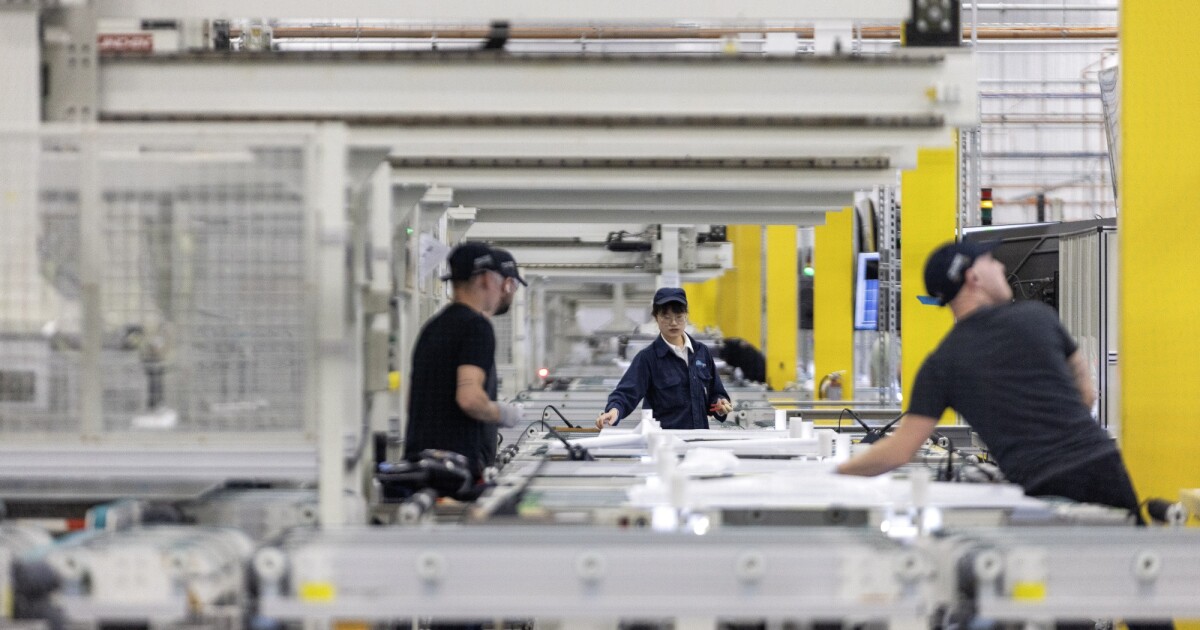
Now, domestic solar factories are booming — with a surge of new investments in U.S. panel factories thanks in part to demand stoked by former President Joe Biden’s 2022 climate law, as well as its tax credits for manufacturing solar equipment, battery parts and other advanced energy components.
But the U.S. supply of new panels — much less the cells, ingots and wafers they’re made from — hasn’t caught up with domestic demand. Meanwhile, the “foreign entity of concern” provisions in the House-passed bill, if adopted by the Senate and enacted, “will be complex and burdensome to implement, creating additional risks and disincentives for clean energy developers, especially those that source components globally,” according to a memo from the League of Conservation Voters.
What’s more, renewable energy developers say the confusion wouldn’t clear up anytime soon, since the Treasury Department is likely to take its time to issue guidance on how to interpret the new requirements. Developers continue to lobby the Senate to jettison the House bill’s IRA changes.
China hawks have cheered the move, saying it’s time Washington got serious about truly severing Beijing from U.S. energy supply chains. Continuing to buy imported equipment from China — or from Chinese firms operating manufacturing plants in other countries — only strengthens the supplier’s dominance over the energy technology necessary in a warming world. And, critics insist, doing so rewards China for alleged use of forced labor — which Beijing denies — as well as unfair trade practices such as heaping government subsidies on the industry.
The House bill’s provisions represent “the culmination of China’s ongoing efforts to undermine U.S. trade laws and cripple our domestic manufacturers,” said Jon Toomey, president of the Coalition for a Prosperous America.
“The United States invented solar technology, and we are committed to protecting and rebuilding our domestic solar industry,” Toomey said. “China’s solar industry is propped up by hundreds of millions of dollars in state subsidies, relies on forced labor, routinely circumvents U.S. trade laws and dumps underpriced products into our market.”
Still, the provisions could make it harder for the U.S. to build its own, independent solar supply chain and to satisfy climbing power demand from artificial intelligence, according to analysts.
“To the extent we’re talking about building electricity generation capacity fast, there’s an organic case to be made for solar,” said Kevin Book, managing director at Washington-based research firm ClearView Energy Partners LLC. “Failing to deliver the raw materials to supply that demand could further undercut the development of the market for that domestic manufacturing, even when it should show up.”
