


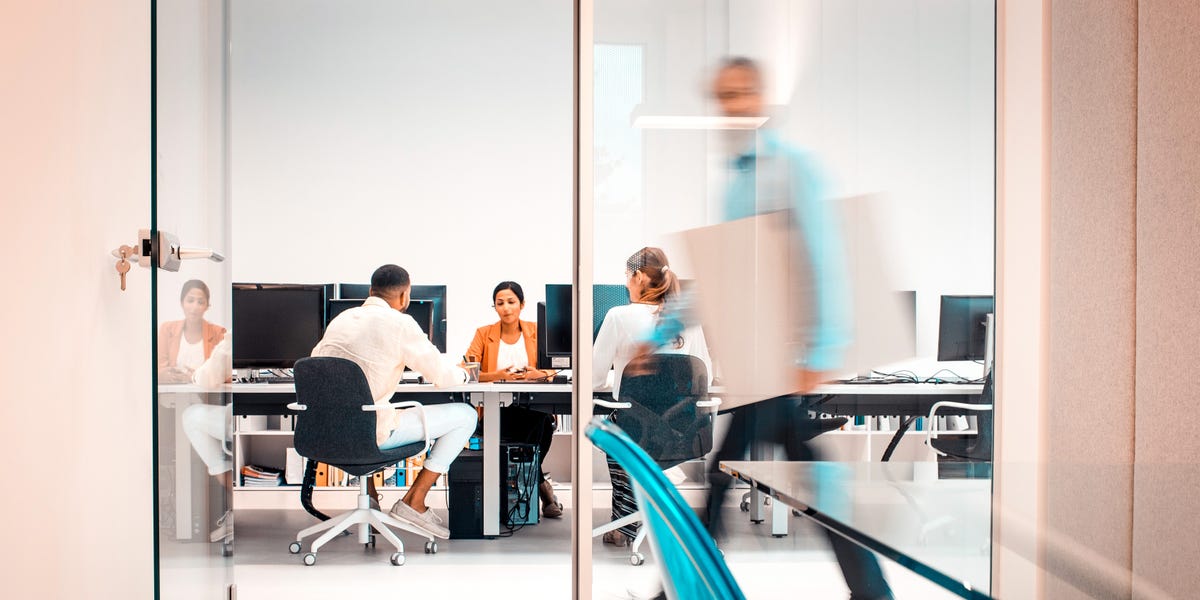
Some companies are cutting middle management positions, and the roles that remain could change significantly in the years ahead.
Aneesh Raman, LinkedIn’s chief economic opportunity officer, believes AI adoption — and the broader economic transformation he expects it to drive — will fundamentally change what it means to be a middle manager over the next decade.
In addition, Google, Intel, Amazon, and Walmart have announced plans this year to collectively lay off thousands of workers, many of them managers. These cuts to midlevel roles are part of a trend some have dubbed the “Great Flattening,” and reflect a broader push to reduce costs and bureaucracy — moves some corporate executives say will make their organizations more efficient. At the same time, companies are grappling with the rise of AI tools and how they might reshape their operations and workforces.
I asked Raman which management skills he thinks will be most critical going forward — and how millennials, many of whom are now in management roles, might navigate their next career challenge: adapting to the evolving role of middle managers. Below are excerpts from our conversation, edited for length and clarity.
Are you a middle manager? Please fill out this quick form, or contact this reporter via email at [email protected] or Signal at jzinkula.29.
How has this ‘great flattening’ trend affected middle managers?
We’re entering a new world of work. Every job is going to look different in five to 10 years.
It’s not going to play out in the same way everywhere on the same timeline, but I think every company is trying to figure out how to build organizations that are able to adapt more than we have before — organizations that are less hierarchical and built more around projects.
One of the biggest things that’s going to look and feel different in five to 10 years is what it means to be a middle manager in the knowledge economy. The job of the manager was to manage the tasks of the people they managed. The role of the manager in this new economy is to be a coach.
Managers are going to have to think about managing people — not the tasks of people, but the energy of people. How to make sure you’ve got teams that have psychological safety to test, and try, and fail in the service of building new things. How you’re being mindful of where people’s skillset and energy are best used in the course of a project as it gets built. It’s a whole different way to manage than the old way.
Related stories

Business Insider tells the innovative stories you want to know
Business Insider tells the innovative stories you want to know
You said you think every job will be different in a decade. What forces do you think will drive this change?
Over the past few years, we’ve seen change come in waves: remote work, shifting generational values, and rising worker expectations. But AI is different. It’s a force, alongside breakthroughs in robotics and quantum computing, that’s reshaping every job, in every sector, all at once.
Over the next decade, AI will be the single biggest driver of work transformation and one of the most profound shifts the labor market has ever seen. We have a window right now to shape that shift — to make work more human, not less — but only if we act with urgency and intention.
What about the changing economy do you think will make managing people, rather than just tasks, particularly important?
The reason I think the role of manager is going to change is the same reason I think we’re entering a new economy, which is that the role of humans at work is going to be more about coming up with new ideas, coming up with new inventions, coming up with new ways of work as an employee or new businesses as an entrepreneur. That’s going to be what will make work linger for humans.
In that world, if you’re a manager at a company, you’re trying to create the best environment for people to imagine and invent, and that’s a different set of tasks than in the previous economy of just tracking people’s tasks and making sure those tasks were moving forward.
The Great Recession and the pandemic both disrupted the careers of millennials, many of whom have transitioned into management roles in recent years. Is the “great flattening” one more setback for the millennial career path?
I think every single person is having their career clock reset right now. Everyone’s job is changing on them, even if they aren’t changing jobs, and everyone’s career trajectory is changing on them, even if they have no plans to change their career trajectory.
That is something that people can approach with anxiety and fear, because we’re biologically wired to be anxious and fearful of change, or it can be something that people see opportunity in so that they can start driving their career and their job in ways that give them more agency and more unique contribution than ever before.
If I look at millennials and Gen Z, they have the “it” credential right now. They have resilience that is undoubtedly part of how those generations have approached work. They have an adaptability that they’ve had no choice but to learn, given all the atmospherics that they’ve had to contend with. Those are really important behaviors that everyone is going to want in their organization.
If you can start by thinking about “What are my strengths?’ And then, “How do I want to apply those strengths to the job I want to create, the career I want to build?” There’s a great deal of opportunity for people to figure out how they want to lean into that change.
I try to remind people: Remember the early nineties, when no one was quite sure what was coming with the internet and the knowledge economy? Well, imagine if you could go back then and you knew everything that was going to come. What would you do? There are a bunch of opportunities to completely change the trajectory of your career.
I encourage people to think about understanding their strengths, including strengths like resilience and adaptability, and then figuring out how they want to maximize the opportunity that’s coming as everything gets remade.
Do you have a story to share? Reach out to this reporter at [email protected].
