


The amount of money needed to fund the future of AI is so large that Wall Street has been rewriting the rules to finance it.
Technology giants have set aside hundreds of billions for the buildout. They’ve also been running to the debt markets to raise money for their plans. By early August, nearly $500 billion in AI-related debt had been issued in 2026, according to estimates by Goldman Sachs Research.
Financing that buildout is no simple task. It’s pushed bankers and investors to develop new financing structures and tap different pools of capital.
The outlook has become more complicated following Democrats’ landslide victory in the midterm elections, as many candidates’ campaign promises included slowing data center construction and tightening oversight. That scrutiny could potentially delay projects, drive up costs, and make it harder for investors to earn the returns they anticipated.
For Diana Liu, a principal at Blue Owl who has spent more than a decade investing in data centers, navigating these challenges is part of the business.
“Development has never been simple,” she told Business Insider following the election. “Experience and long-term local relationships matter more than ever, because a data center project only works when the community, the tenant and the developer all want it to.”
Still, the enormous scale of the AI buildout means there will be plenty of work to do.
“We are still in the early innings, with a long runway ahead,” said Maya Venkatraman, a managing director at Morgan Stanley,
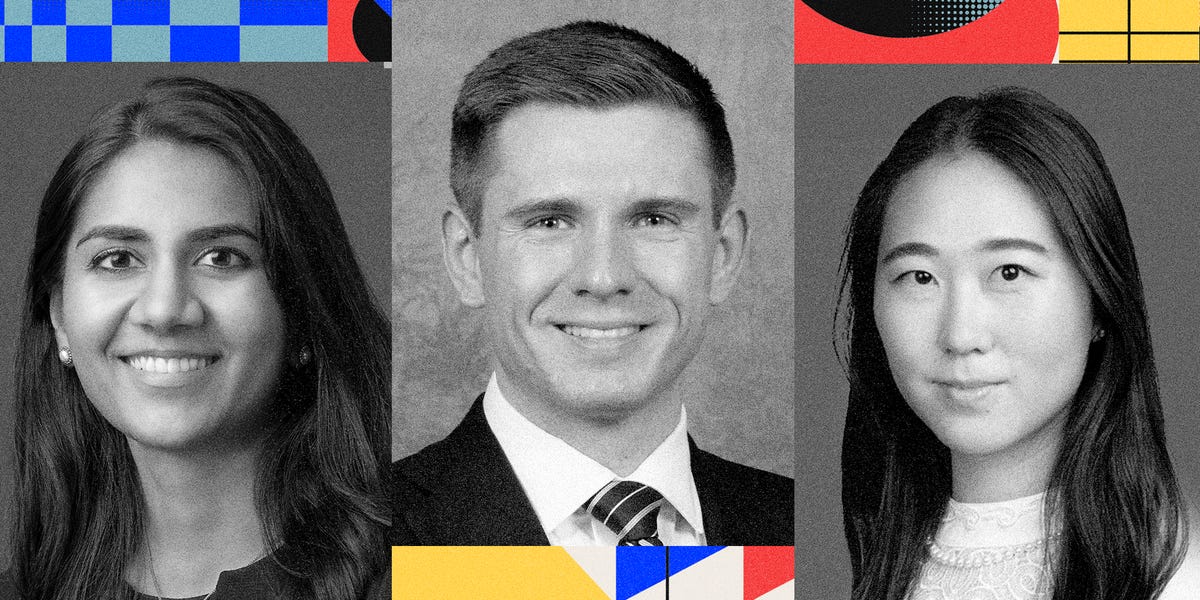
Both are among Business Insider’s 2026 Rising Stars of Wall Street, seven of whom are helping finance the AI infrastructure boom.
Meet the crew bankrolling the technology through multibillion-dollar bond offerings, innovative financing, and investments in the power plants and data centers that will underpin the AI economy.
Cody Kiechle, 33, Bank of America

Courtesy of Cody Keichle; Ray Dak Lam for BI
Diana Liu, 33, Blue Owl Capital
Courtesy of Diana Liu; Ray Dak Lam for BI
Maya Venkatraman, 34, Morgan Stanley
Courtesy of Maya Venkatraman; Ray Dak Lam for BI
Fiona Ismail, 34, JPMorgan
Courtesy of Fiona Ismail; Ray Dak Lam for BI
Kate Casey, 32, KKR
Courtesy of Kate Casey; Ray Dak Lam for BI
Kevin Curtin, 35, JPMorgan
Courtesy of Kevin Curtin; Ray Dak Lam for BI
Jake Epstein, 28, Blackstone
Courtesy of Jake Epstein; Ray Dak Lam for BI
