


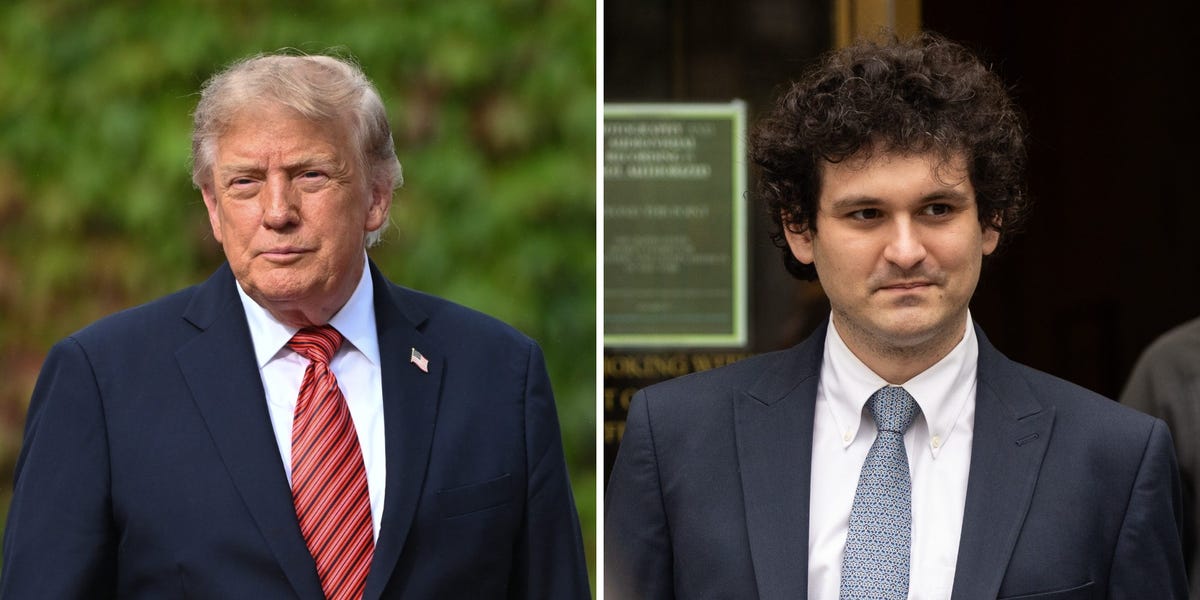
Effective altruism is having another moment in the spotlight, three years after Sam Bankman-Fried’s crypto collapse first put the movement on the map.
The AI boom has created enormous new wealth among people sympathetic to effective altruism — a brand of philanthropy espoused by many in Silicon Valley. At the same time, the movement’s influence over AI safety debates has put it at odds with President Donald Trump’s push for rapid American AI development.
On Monday, Trump dismissed fears that advanced AI could threaten humanity as a “hoax.” His administration went further: the Defense Department posted “Americanism, not effective altruism” on X, and Trump advisor David Sacks accused effective altruism-linked groups of forming a “Doomer Industrial Complex” that could set back the US in its tech race with China.
These mentions brought new scrutiny to a movement still facing reputational issues from its ties to Bankman-Fried, the former boss of FTX, who is serving a 25-year prison sentence after being convicted of orchestrating multiple frauds.
Effective altruism began with a question about doing the most good
Effective altruism is more of a loose community than a formal organization. Its central idea is that people should use evidence and reason to determine how best to use their money and careers to benefit humanity.
Its intellectual roots include philosopher Peter Singer’s 1972 essay “Famine, Affluence, and Morality,” which argued that affluent people have a duty to prevent suffering when they can do so without sacrificing something equally important.
Fairfax Media via Getty Images/Fairfax Media via Getty Images via Getty Images
The movement took shape in the 2000s and 2010s through groups like GiveWell, Giving What We Can, and 80,000 Hours, with Oxford philosopher William MacAskill emerging as a leading voice.
Early effective altruism emphasized measurable interventions: malaria prevention, direct cash transfers, and reducing factory-farm suffering.
Over time, though, a faction embraced “longtermism” — the idea that safeguarding future generations from catastrophic risks might matter more than today’s problems.
That shift pushed money and talent toward pandemic preparedness, nuclear risk, and, pertinently, the danger that humanity could lose control of highly capable AI.
Silicon Valley was fertile ground for effective altruism
Effective altruism’s data-driven approach resonated with an industry built on optimization and scale. Facebook cofounder Dustin Moskovitz and his wife, Cari Tuna, became major funders through an organization now called Coefficient Giving, and formerly known as Open Philanthropy.
PATRICIA DE MELO MOREIRA/AFP via Getty Images
Other tech figures backed research into existential risk, while effective altruism groups urged graduates to pursue high-impact careers and practice “earning to give” — taking lucrative jobs for the purpose of donating the proceeds.
Bankman-Fried became the movement’s most visible example of that strategy, framing his wealth-building as a vehicle for philanthropy and pledging billions to effective altruism-linked causes.
FTX’s collapse in 2022, followed by Bankman-Fried’s fraud conviction the following year, badly damaged the movement’s credibility and raised uncomfortable questions about whether its leaders had ignored red flags around a major donor.
Drew Angerer/Getty Images
Even so, the movement’s global health and animal-welfare work continued, and its ideas remained embedded in the AI industry.
More recently, soaring AI valuations have produced a fresh wave of potential donors: the Financial Times reported in August that effective altruism-linked giving reached roughly $2 billion in 2025, with more than 60 current and former Anthropic employees pledging part of their income.
Anthropic has downplayed its ties to effective altruism, but a 2025 forum post detailed the company’s connections to the movement and argued that Anthropic’s emphasis on safety and long-term, evidence-based thinking reflects the movement’s core ideas.
Bloomberg/Getty Images
CEO Dario Amodei signed an early Giving What We Can pledge, and major effective altruism donors — including Moskovitz, Bankman-Fried, and Jaan Tallinn — invested in the company.
Neither Dario Amodei nor Anthropic’s president, Daniela Amodei, identifies as an effective altruist, though Daniela is married to Holden Karnofsky, a cofounder of GiveWell and one of the movement’s most prominent figures.
Why the Trump administration is targeting Effective Altruism
Effective altruism-linked funders have helped turn AI safety into a legitimate field, financing “alignment” research aimed at keeping powerful systems under human control and supporting groups that evaluate advanced models.
Among them is METR, which grew out of an effective altruism-linked research group and which Amodei has proposed as an independent watchdog for frontier labs, a suggestion that has drawn accusations of conflicts of interest.
The current fight erupted after Jacob Coxon, a departing Anthropic researcher, publicly warned that leading AI labs were “gambling with our lives” by racing ahead without adequate safeguards.
Days later, Amodei called for slowing the development of the most advanced models until safety measures caught up, a position echoed by OpenAI’s Sam Altman, Elon Musk, and Google DeepMind’s Demis Hassabis.
Trump rejected that consensus, calling AI extinction fears a “hoax” and warning that slowing down would cede ground to China.
Mark Schiefelbein-Pool/Getty Images
On Monday, Vice President JD Vance went further, suggesting industry calls for regulation might be a “Trojan horse” meant to burden smaller competitors with costs only large firms could absorb.
In the fight over AI regulation, the movement’s links to the AI safety industry mean effective altruism has become shorthand for the caution that rapid-development advocates want to push past.
