


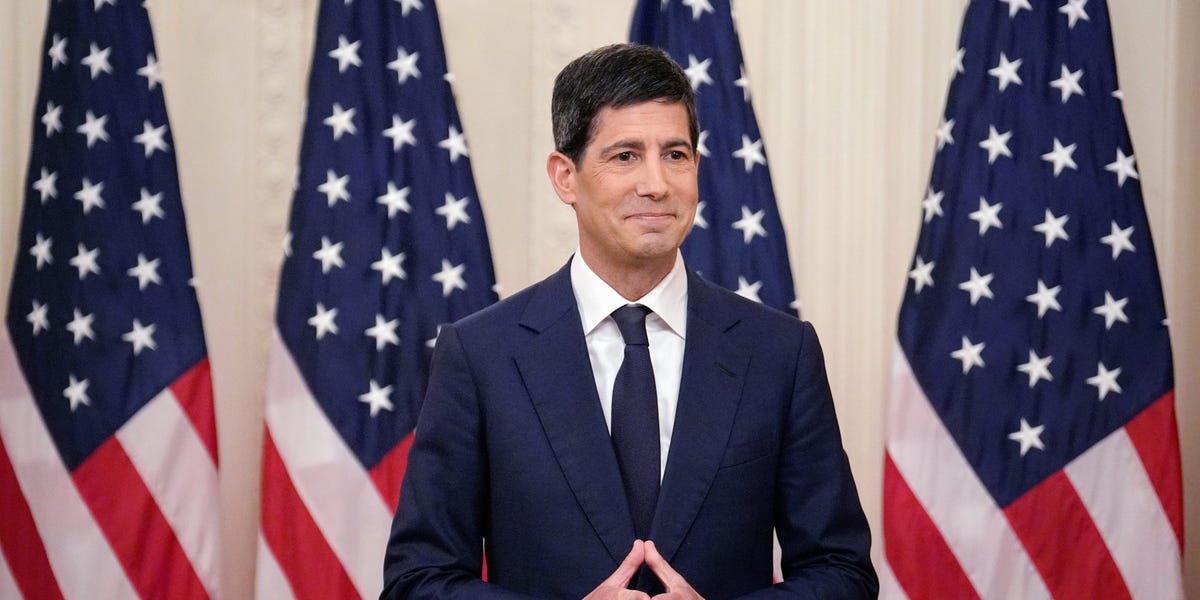
Kevin Warsh is stepping up to the plate.
The Wall Street executive turned Federal Reserve chair will lead his first interest rate decision Wednesday. CME FedWatch, which predicts rate decisions based on market activity, showed a near-total chance of a hold as of June 15.
This month’s rate call comes on the heels of oil price pressure from the Iran war pushing inflation to its highest level since 2023 and a dip in consumer sentiment. On the flipside, the May jobs report showed continued strength in the labor market. All eyes will be on Warsh as he shares the Fed’s economic outlook — and sets the tone for a central bank under new leadership.
What we’re watching for from Warsh
Warsh, who previously served as a Fed governor, has a reputation for being tough on inflation. The consumer price index rose 4.2% over the year in May, far above the Fed’s 2% goal, largely from a spike in energy prices triggered by the Iran war and the virtual closure of the Strait of Hormuz and its oil flows.
Beyond soaring oil prices, former Chair Jerome Powell said at his last meeting that the US economy has experienced a series of shocks: the pandemic, Russia’s invasion of Ukraine, the Iran war, and the White House’s flip-flopping tariff policies. All have pushed up inflation rates, Powell said, and “this is a very different world, and a much more challenging one” for the central bank to navigate than the previous decades of relative price stability.
While Warsh and the Federal Open Market Committee are likely to hold rates steady in June, his first press conference as chair will likely give insight into how his approach will differ from Powell’s. Warsh was nominated by President Donald Trump, who has been vocal about his desire for lower interest rates. Lower rates could help stimulate a sluggish economy, but run the risk of pushing up inflation even higher. Warsh will have to decide which side of the dual mandate he feels is most pressing.
A permanent resolution to the Iran war and strong job growth could make that task easier. CME FedWatch recently updated its longer-term predictions, showing a lower chance of a hike by the end of 2026. The FOMC will also release its quarterly economic projections Wednesday.
The new chair is also stepping into a historically divided Fed. There were four FOMC dissents at the April meeting, the most since 1992, and the previous eight meetings also strayed from the committee’s typical unanimity. The pattern reflects ongoing economic uncertainty — but Warsh said he won’t bend to political pressure.
“Fed independence is up to the Fed,” he said during his confirmation hearing. “That has three implications: First, Congress is tasked with the mission to ensure price stability. Inflation is the Fed’s choice. Second, Fed independence is at its peak in the conduct of monetary policy.” Third, “the Fed must stay in its lane.”
How the Fed impacts consumers
The central bank’s interest rate decisions have a ripple effect on household finances. Americans are unlikely to feel the impact of a single call, but multiple cuts or hikes in a row shape the cost of borrowing and stability in the job market.
Holding rates steady in June would largely continue the status quo in the economy: A job market that’s growing despite lackluster hiring opportunities, and stubborn inflation that’s driving up the cost of living. Interest rates shape how easily Americans can access mortgages, afford auto loans, and pay off credit card debt. Rates also shape companies’ bottom lines, affecting hiring patterns.
Bankrate financial analyst Stephen Kates said even if the Fed keeps rates steady, mortgage rates will likely still fall. “If we see oil prices recede, if we see inflation start to improve, then we’re going to see mortgage rates come down,” he said.
Warsh is also set to be a Fed chair bullish on AI growth. Despite being hawkish on inflation, Warsh’s ongoing outlook is likely to be optimistic on the tech sector — from the job market impact to economic growth.
But, as Kates put it, Warsh will have to match his policy approach to a challenging financial reality.
“Kevin Warsh is coming in with a fresh face, fresh ideas, a very different perspective on the role the Fed should play,” he said. “But also coming into a very difficult environment.”
