


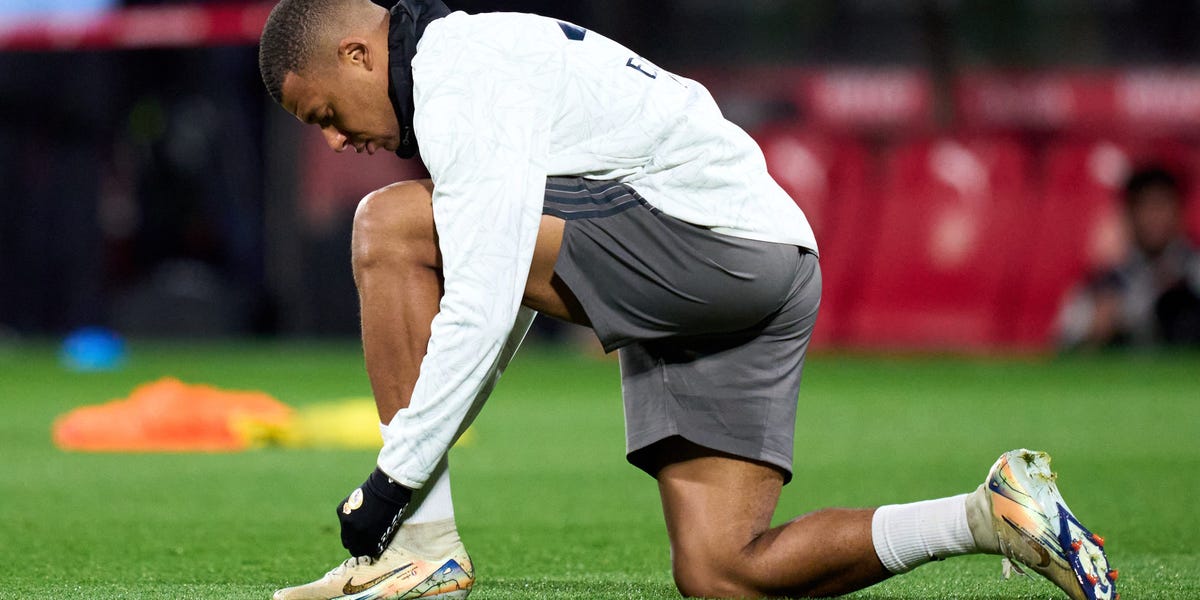
If you followed the World Cup this past summer, chances are you saw a blur streak across your screen at least a few times.
That was probably Kylian Mbappe, the fleet-footed French striker who buried 10 goals at the tournament, bringing his lifetime total to a record-setting 22. Oh, and did I mention he’s still only 27?
No stranger to high-profile transfer news, Mbappe shocked the sports world last Friday by switching his sponsorship allegiance from Nike to … On? Apparently the running-shoe company — which has already taken a bite out of Nike sales — is making a push into the World’s Game.
Let’s be clear here: Mbappe didn’t leave Nike because the company is struggling. On surely backed up the Brink’s truck for him, offering him an irresistible amount of money and a shareholder stake to put his priceless feet in the care of their shoes.
But the move still signals that On is ready to play with the big boys — and willing to shell out large sums in order to do so. It shows just how formidable the company has become as a competitor.
Mbappe’s exodus is merely the latest indignity suffered by Nike, which is being removed from the S&P 100 today following a prolonged decline. The company has been a member of the index since 2008, and it’s part of a quartet that’s being replaced with stocks linked to the AI trade.
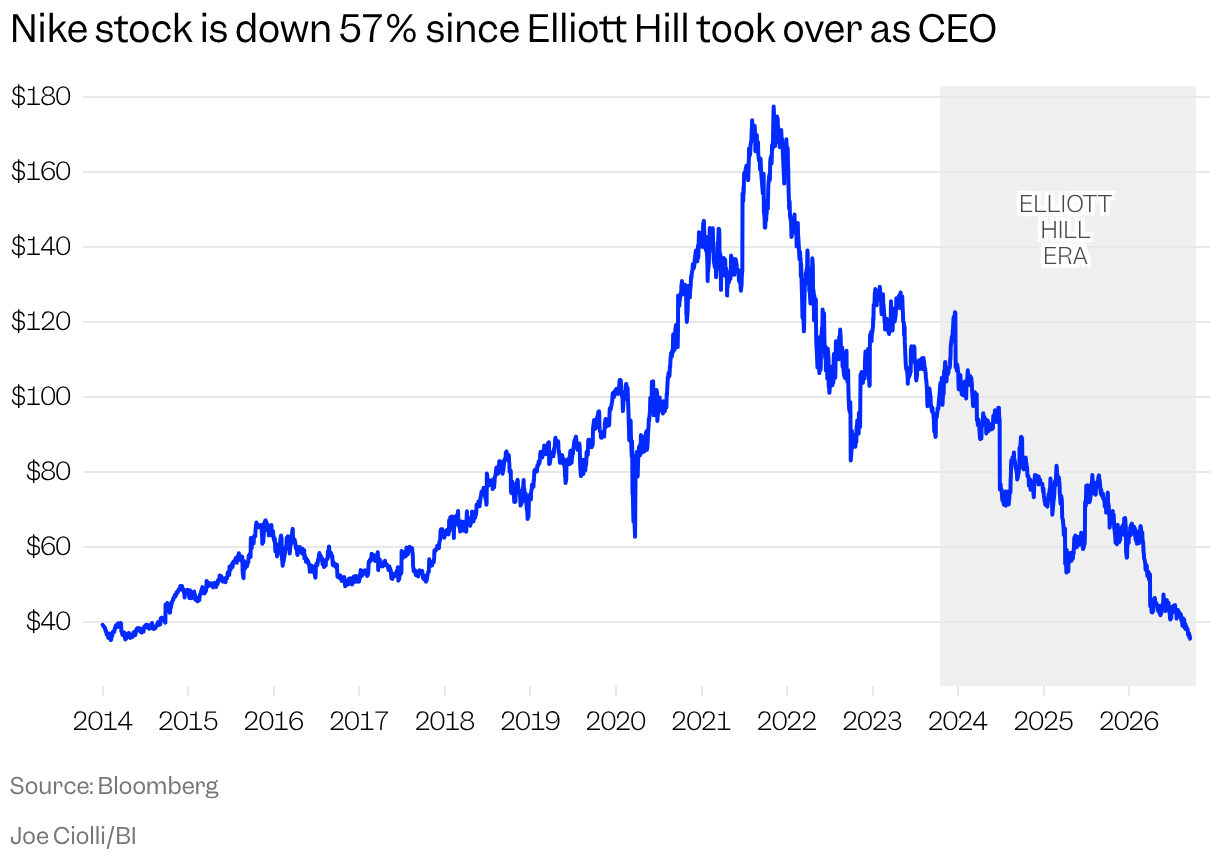
There are also the longer-term issues that have plagued Nike during Elliott Hill’s return as CEO. He was brought back to revitalize the company after an ill-advised foray into direct-to-consumer sales, but his renewed focus on athleticwear and running hasn’t panned out.
Beyond the rise of running-shoe competitors On and Hoka, Nike has had to contend with a slowdown in China. Shoppers are increasingly turning to local brands, sparking a sales contraction in one of the company’s biggest markets.
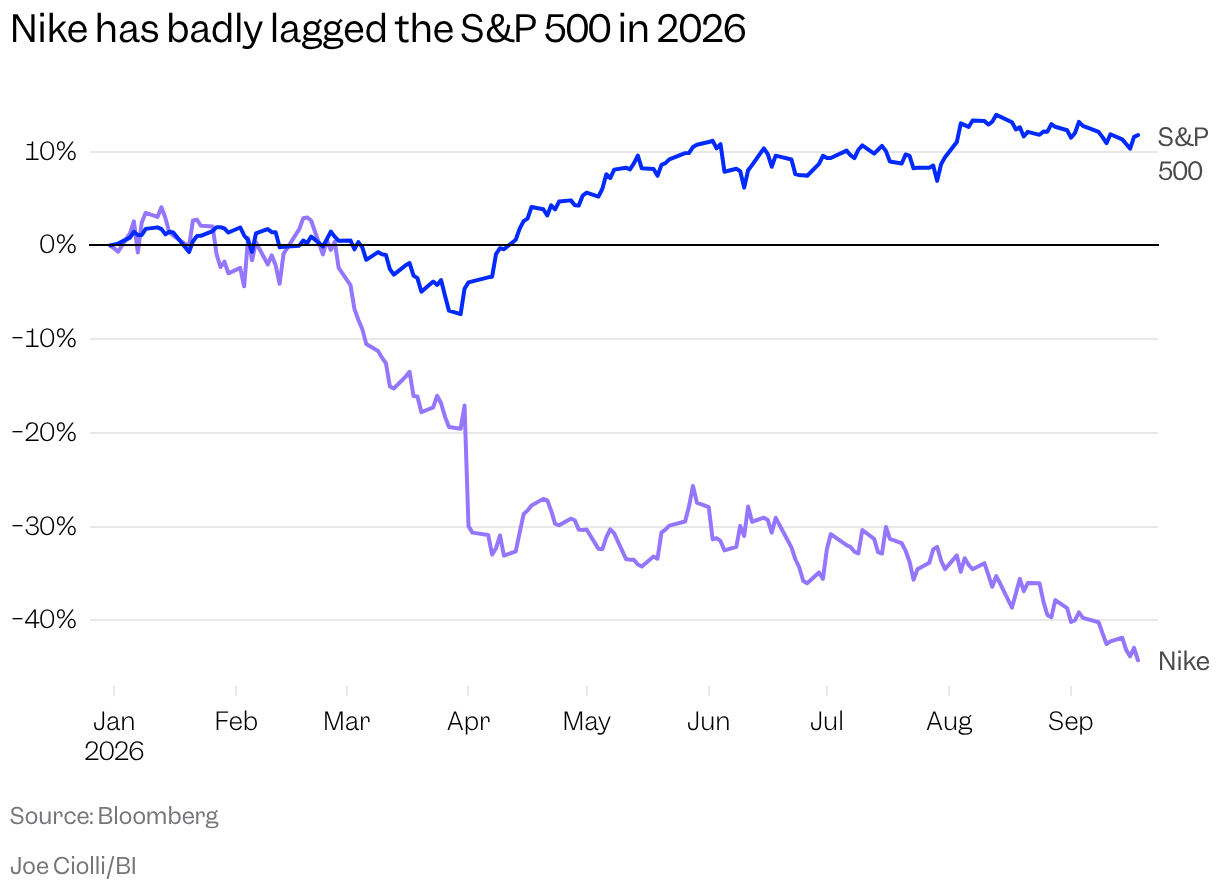
Guidance hasn’t been pretty either. Back in April, the company predicted that sales would fall not just in the next quarter, but also for full-year 2026, prompting a wave of analyst-rating downgrades across Wall Street. Shares fell 16% that day to their lowest since 2014. Then, during second-quarter earnings, CFO Matt Friend said Nike is “not expecting the environment to improve meaningfully over the next six months.”
Not exactly the most uplifting stuff, and the lack of life in the year-to-date stock chart reflects that:
So what’s the play for Nike? They’re turning to the ever-wise millennial generation, of course.
All kidding aside, the company did last week announce the appointment of Alexandre Arnault — the 34-year-old son of mega-billionaire LVMH CEO Bernard Arnault — to its board of directors. The younger Arnault currently helps run LVMH’s wine and spirits business, and previously worked on a successful overhaul of German luggage-maker Rimowa.
For investors, the question is whether Nike will ever find its mojo again. It’s been a turnaround play for a while, but it continues to bottom out. In light of the Mbappe news, Nike has to prove it can stop ceding shelf space, the spotlight, and the next generation of athletes to brands that were supposed to be niche competitors.
Your guide to what’s moving markets
