


President Donald Trump on Monday will revive a controversial policy that aims to slash drug costs by tying the amount the government pays for some medicines to lower prices abroad, White House officials said.
Trump will sign an executive order including several different actions to renew that effort, known as the “most favored nation” policy.
“For too long, foreign nations have been able to free ride off of the American people, and American patients forced to pay for too much for prescription drugs,” one official told reporters on Monday.
“The president is dead serious about lowering drug prices,” they said.
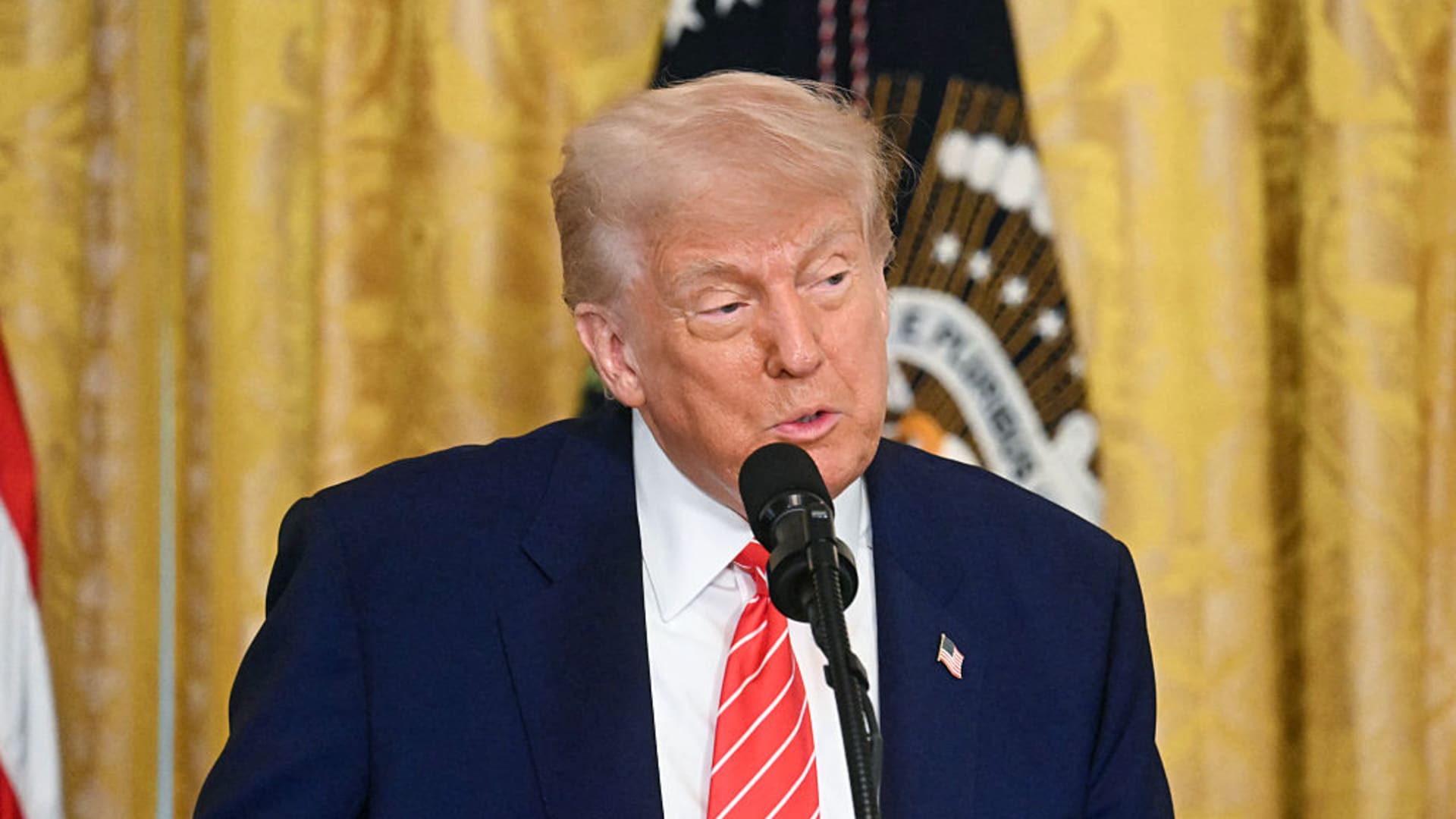
US President Donald Trump participates in a celebration of military mothers in the East Room of the White House in Washington, DC, on May 8, 2025.
Jim Watson | AFP | Getty Images
Shares of U.S. drugmakers dropped in premarket trading Monday ahead of the official announcement. Eli Lilly fell more than 5%, while Pfizer, Merck and Johnson & Johnson dropped more than 2%.
But White House officials did not disclose which medications the order will apply to. They said Monday’s announcement will be broader than a similar policy that Trump tried to push during his first term, which only applied to Medicare Part B drugs.
Officials added that the administration will have a particular focus on drugs that have the “largest disparities and largest expenditures,” which could include popular weight loss and diabetes treatments called GLP-1 drugs.
It’s unclear how effective the policy will be at lowering costs for patients. In a social media post on Monday, Trump claimed drug prices will be cut by “59%, PLUS!”
The order directs the Office of the U.S. Trade Representative and the Department of Commerce to crack down on “unreasonable and discriminatory policies” in foreign countries that “suppress” drug prices abroad, the officials said.
“We are going to be working to make sure that countries aren’t being unfair in their negotiations with pharmaceutical companies, right?” one official said. Drugmakers are “constantly complaining” about being put “in an untenable situation when in these negotiations” because those companies typically have to broker drug discounts with entire countries, the official added.
Unlike the U.S., several foreign countries offer universal health coverage where the government is the sole payer, giving it significant leverage to negotiate or set drug prices.
White House officials said they expect drugmakers to provide discounts across the board to “reciprocate” the actions the Trump administration is taking to address prices abroad.
Trump’s order also directs the Secretary of the Department of Health and Human Services to encourage drugmakers to offer “most favored nation prices” on “direct-to-consumer sales” of their medicines.
Within 30 days, the secretary will also have to set clear targets for price reductions across all markets in the U.S., according to the officials. That will open up a round of negotiations between HHS and the pharmaceutical industry, officials said, not providing exact details on the nature of those talks.
If “adequate progress” is not made towards those price targets, HHS Secretary Robert F. Kennedy Jr. will impose the most favored nation pricing on drugs through rulemaking.
The order also directs the Food and Drug Administration to consider expanding imports from other developed nations beyond Canada. Trump signed a separate executive order in April directing the Food and Drug Administration to improve the process by which states can apply to import lower-cost drugs from Canada, among other actions intended to lower drug prices.
Monday’s order also directs the Department of Justice and Federal Trade Commission to aggressively enforce “anti-competitive actions” that keep prices high in the U.S.
The Department of Commerce will also consider export restrictions that “fuel and enable that low pricing abroad.”
It is Trump’s latest effort to try to rein in U.S. prescription drug prices, which are two to three times higher on average than those in other developed nations – and up to 10 times more than in certain countries, according to the Rand Corporation, a public policy think tank.
The order is a blow to the pharmaceutical industry, which is already bracing for Trump’s planned tariffs on prescription drugs. Drugmakers have argued that the “most favored nation” policy would hurt their profits and ultimately, their ability to research and develop new medicines.
White House officials contended that pharmaceutical companies will continue to make money after the price cuts if they realize that the U.S. “alone is not going to pay for innovation” and if they increase prices abroad to get additional revenues there.
Drugmakers “should pursue deals where they get financially rewarded commensurate the value that they are providing to other nations, health systems,” one official said.
The policy could help patients by lowering prescription medication costs, which is an issue top of mind for many Americans. More than three in four adults in the U.S. say the cost of medications is unaffordable, according to a KFF poll from 2022.
The industry also lobbied against similar Trump plans during his first term. He tried to push the policy through in the final months of that term, but a federal judge halted the effort following a lawsuit from the pharmaceutical industry. The Biden administration then rescinded that policy.
White House officials initially pressed congressional Republicans to include a “most favored nation” provision in the major reconciliation bill they plan to pass in the coming months, but the policy would have specifically targeted Medicaid drug costs, Politico reported earlier this month. Several GOP members opposed that measure.
How Trump’s order could affect patients, companies
The industry’s largest trade group, PhRMA, estimated that Trump’s Medicaid proposal could cost drugmakers as much as $1 trillion over a decade.
Some health policy experts have said a “most favored nation” drug policy may not be effective at lowering medication costs.
For example, USC experts said the policy “can’t undo the basic economics of the global drug marketplace,” where 70% of pharmaceutical profits worldwide come from the U.S.
“Facing a choice between deep cuts in their U.S. pricing or the loss of weakly profitable overseas markets, we can expect many firms to pull out from overseas markets at their earliest opportunity,” experts said in a report in April.
That will leave Americans paying the same amount for medications, drugmakers with lower profits and future generations of patients with less innovation, they said.
“In sum, everyone loses,” the experts said.
Other experts have said another legal fight with the pharmaceutical industry could prevent the policy from taking effect.
But even if the drug industry pushes back on Trump’s executive order, his administration still has another tool to push down drug prices: Medicare drug price negotiations.
It’s a key provision of the Inflation Reduction Act that gives Medicare the power to negotiate certain prescription drug prices with manufacturers for the first time in history.
Trump last month proposed a change to that policy that drugmakers have long sought. Lawmakers on both sides of the aisle could be receptive to the idea, which proposes changing rules that differentiate between small-molecule drugs and biologic medicines.
Trump last week said he plans to announce tariffs on medicines imported into the U.S. within the next two weeks. Those planned levies aim to boost domestic drug manufacturing.
Drugmakers, including Eli Lilly and Pfizer, are pushing back on those potential duties. Some companies have questioned whether the tariffs are necessary, given that several of them have already announced new U.S. manufacturing and research and development investments since Trump took office.
Still, Trump last week doubled down on efforts to reshore drug manufacturing. He signed an executive order that streamlines the path for drugmakers to build new production sites.
Caplan noted that even if the drug industry pushes back on the executive order, the administration still has another tool at its disposal: Medicare drug pricing negotiations.
