


Surging oil prices have long been anathema to markets and the economy, but the latest shock may not matter as much this time around, JPMorgan Private Bank says.
Oil spiked back back above the $100-a-barrel mark last week, an important psychological threshold that has come to signal energy-market stress. Brent crude, the international benchmark, surpassed $100 for the first time since July last week, and has continued to rise in recent day, trading around $107 a on Tuesday. West Texas intermediate crude also rose, hovering around $103 a barrel.
The $100 mark has been a clear line of demarcation during the Iran war, with oil fluttering above or below the level as peace hopes have waxed and waned during the six-month conflict.
After years of historically low oil prices, it also signals brewing pressure for markets and the economy.
Yet, the threshold may simply not be as meaningful as it once was, Kriti Gupta, a global investment strategist at JPMorgan, said. She pointed to the cost of gas as a percentage of total disposable income, which is near historic lows. Americans spend an average 2.5% of their income at the pump, down from over 6% during the oil price shock of the 1970s and 1980s.
An inflationary shock like what Americans saw in the early 1980s would be the equivalent of gas prices rising above $10 a gallon today, the bank estimated, pointing to protective factors like consumers having extra cash buffers and lower debt levels today.
“After several rounds of fiscal stimulus, tariff refunds and tax cuts, households have largely deleveraged to multi-decade lows, creating a larger buffer against higher prices,” Gupta wrote.
“The same gasoline price increase that would have meaningfully squeezed household budgets two decades ago, or even four years ago, now represents a materially smaller drag on spending power,” she added, referring to the crude price shocks of the early 2000s and in the early days of the Russia-Ukraine war.
US markets also look more resilient in the face of higher oil prices, the bank said. Though the S&P 500 has looked “increasingly sensitive” to the price of crude, investors are looking into Middle East supply disruptions with more visibility than they were at the time the Iran war first unfolded, Gupta said.
“Investors are no longer pricing a worst-case disruption scenario that would inhibit the economy, and by extension, the stock market. A world where oil is expensive but supply remains available is fundamentally different from one in which investors are trying to assess whether a substantial share of global production could disappear overnight,” she added.
Markets have been skittish but have mostly tolerated $100-a-barrel oil during the course of the war. The S&P 500 is only down about 3% from all-time highs reached in late August. Still, anxiety is rising over the inflation outlook, especially as Americans are feeling more pain at the pump.
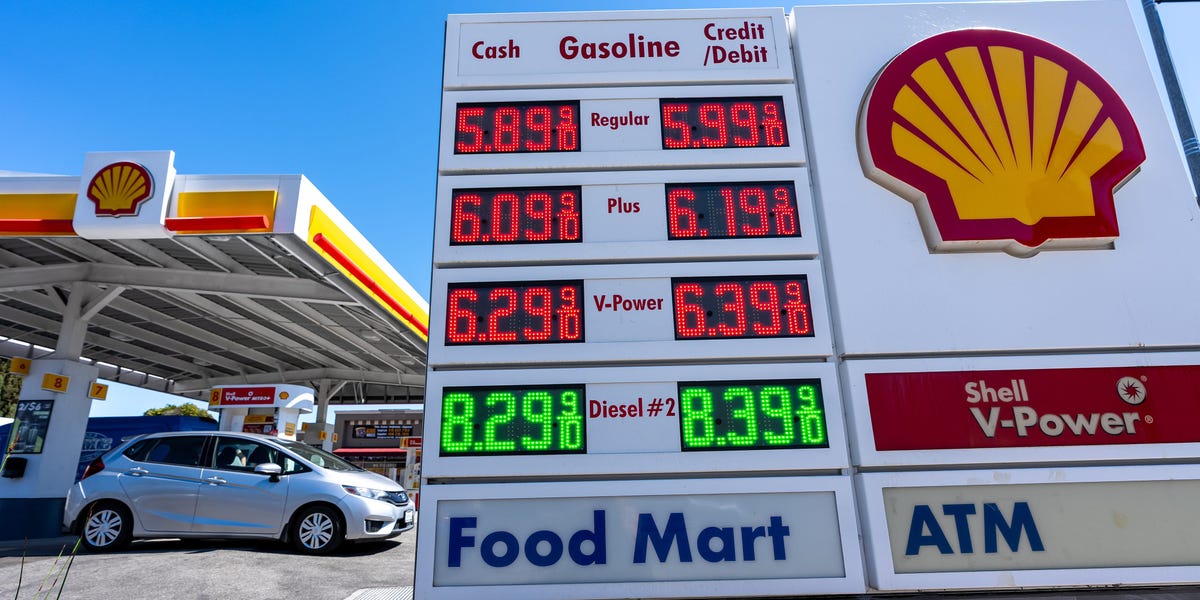
The average price for a gallon of regular gas rose to $4.32 on Tuesday, up from $3.17 a year ago, according to the AAA. Diesel prices also hit a fresh record, rising to $6.26 per gallon.
