


Luxury spending is holding up in parts of Asia even as the AI-fueled stock-market rallies that helped create new wealth have stumbled.
In South Korea and Japan, affluent consumers are still spending on jewelry, watches, and other luxury goods after huge gains in AI-linked stocks swelled household wealth.
The trend is most apparent in South Korea, where Samsung Electronics, SK Hynix, and other technology companies powered a historic stock-market rally earlier this year.
Markets have since turned volatile, but consumer spending has proved more resilient.
“Buoyant revenues for technology firms have helped to drive large bonuses and dividend payouts, as well as wealth effects from rising stock prices, the combined impact of which has boosted consumption spending in the first half of 2026,” Rajiv Biswas, CEO of Asia-Pacific Economics, told Business Insider.
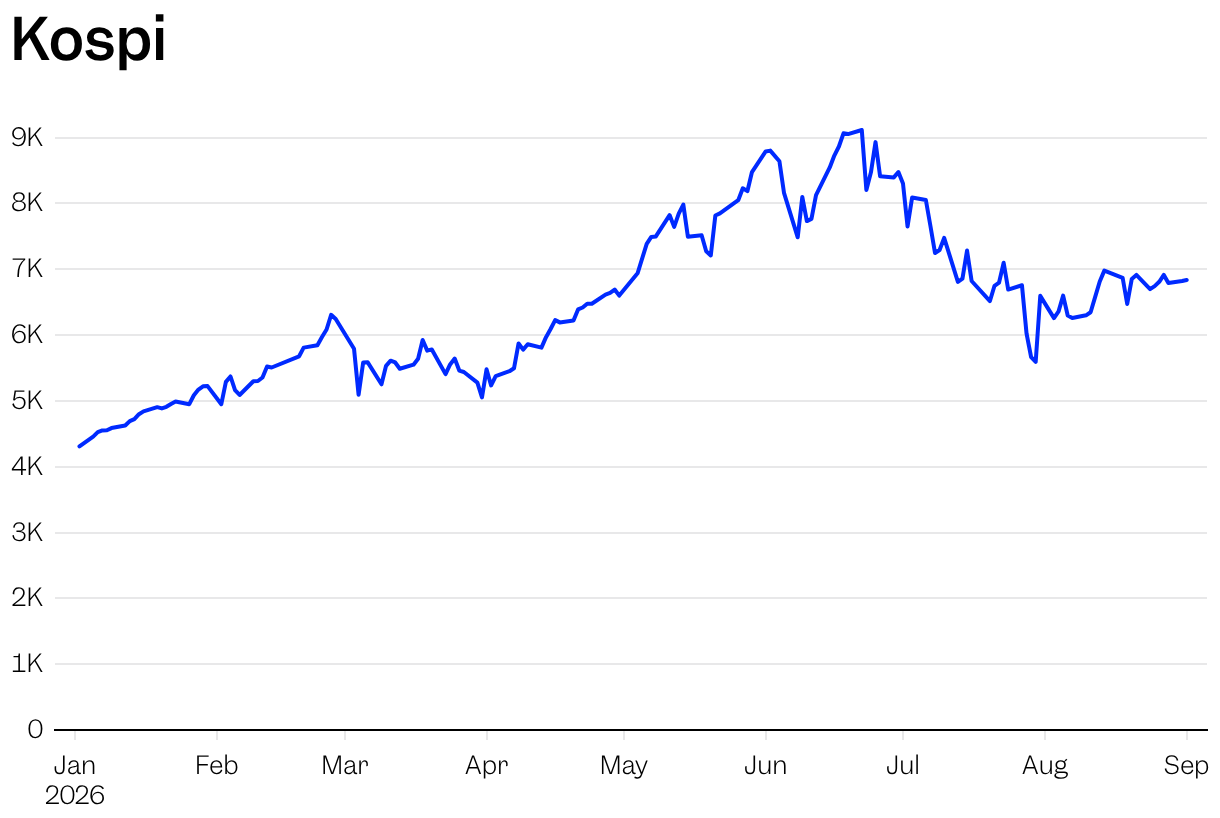
Korean spending slowed in July before rebounding in September, a dip the bank attributed partly to market swings, Kathleen Oh, the chief Korea and Taiwan economist at Morgan Stanley, wrote in a September 17 report. She added that consumer confidence in the spending recovery remained intact.
The bank raised its forecast for private consumption growth this year to 2.6% from 2.2%, citing stronger household incomes, fiscal support, rising wealth, and inbound tourism.
Department stores and luxury companies are going strong
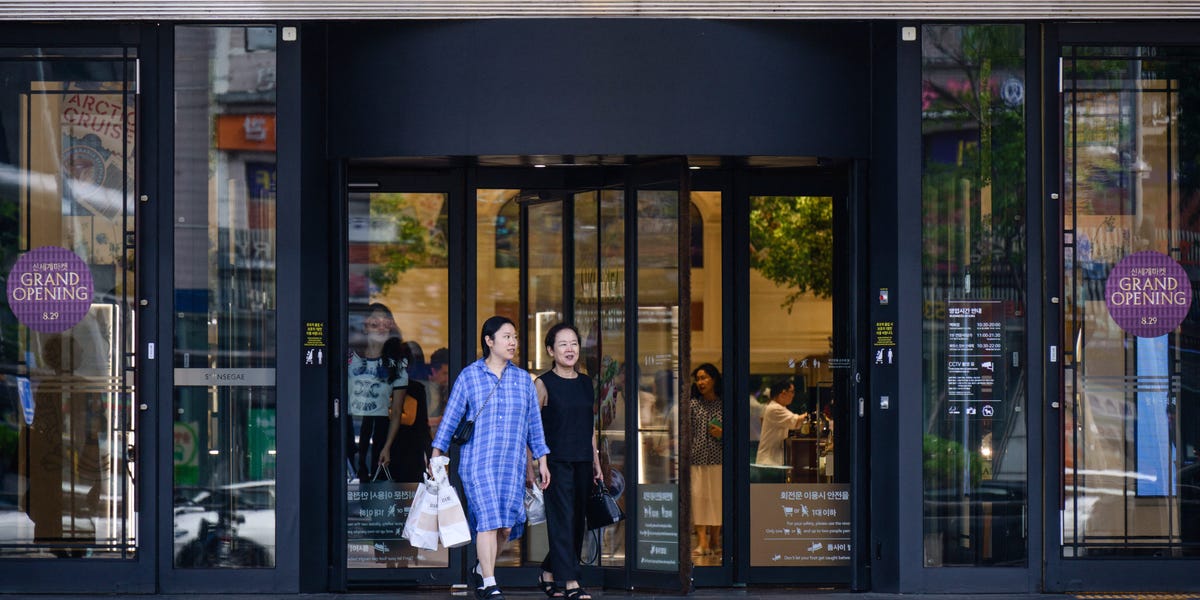
The resilience is showing up at department stores.
At Shinsegae, one of South Korea’s biggest high-end department-store operators, same-store sales rose 15% from a year earlier in August, according to Bank of America, with luxury sales up 20%. Revenue from international customers jumped 82%.
The strength fits a pattern BofA has found in past market cycles. Korean department-store sales tend to follow increases in household equity investment, with the relationship strongest at a lag of about a year.
Luxury companies are seeing strong demand, too.
LVMH reported strong first-half growth in Asia outside Japan. CEO Bernard Arnault highlighted the “remarkable performance” of Louis Vuitton’s new stores in Seoul and Beijing as one factor behind faster growth in the second quarter.
Richemont, the owner of Cartier and Van Cleef & Arpels, also reported strong demand. Asia-Pacific sales rose 21% in the quarter ended June, with South Korea and Taiwan among its strongest markets.
But the latest numbers suggest the spending boom is cooling after a blockbuster first half that sent both luxury sales and shares of South Korea’s major department-store operators soaring alongside the broader market.
“Demand is no longer uniformly strong, but it is not breaking either,” JPMorgan analysts wrote in a September 18 report.
Luxury demand had cooled since July as market volatility increased, with jewelry, watches, and top-tier brands holding up better than the broader category, the analysts added.
More AI money could still reach consumers
Stock-market gains are only one way the AI boom is reaching Korean households.
Morgan Stanley now expects the country’s semiconductor windfall to spread more broadly through investment, government finances, and household income.
“Korea is poised to monetize the semis super-cycle on a scale and with durability of historic proportions,” its economists wrote, saying the benefits could spread through the economy over the next three to five years.
Employee pay is one channel.
Morgan Stanley estimates Samsung Electronics and SK Hynix could generate 66.7 trillion won, or $49 billion, in combined gross employee compensation this year, rising to 107.6 trillion won in 2027 and 114.9 trillion won in 2028.
Average annual liquid bonus capacity between 2026 and 2028 could be about 20 times the 2025 level, the bank added.
That leaves another source of spending power even if stock-market gains become less reliable.
Japan’s big spenders
Japan’s high-end retailers are also seeing affluent domestic shoppers spend as the country’s stock market has also rallied strongly this year, with AI-linked chip and equipment makers among the biggest winners.
At Takashimaya, one of Japan’s largest high-end department-store chains, in-store sales rose 3.9% in August from a year earlier.
Meanwhile, Richemont’s sales in Japan surged 36% in the quarter ended June, driven by both domestic customers and tourists. Hermès reported an 11% increase in first-half Japanese sales at constant exchange rates.
Biswas said the AI wealth effect is likely to be more muted in Japan.
“The majority of Japanese households have low direct exposure to the stock market, with a strong focus on low-risk fixed income assets,” he said.
Taiwan offers a longer-running example.
Around Hsinchu Science Park — home to TSMC and hundreds of companies in its semiconductor supply chain — years of chip wealth have fueled demand for housing, luxury retail, and premium services.
Former farmland has given way to luxury apartment towers, while home prices have climbed beyond the reach of many longtime residents.
