



An unusual trend in the job market could be responsible for the hit to your paycheck.
Goldman Sachs analysis highlighted a possible consequence of the low-hire, low-fire labor market — a dynamic in which employers aren’t letting go of many workers, while also curtailing new hiring.
That dynamic has resulted in “unusually low” churn, or the pace that workers change jobs in the market, Pierfrancesco Mei, an economist at the bank, wrote in a note on Monday. In the end, the trend spells trouble for wage growth, as workers who do switch to new jobs are more likely to accept lower pay, and those staying in their current roles are more likely to accept smaller pay increases due to job insecurity, Mei said.
The job reallocation rate, one reflection of churn, is hovering around a 40-year low, with the 12-month average of total private-sector job creation and destruction as a share of employment recently falling under 4%.
Goldman Sachs Global Investment Research
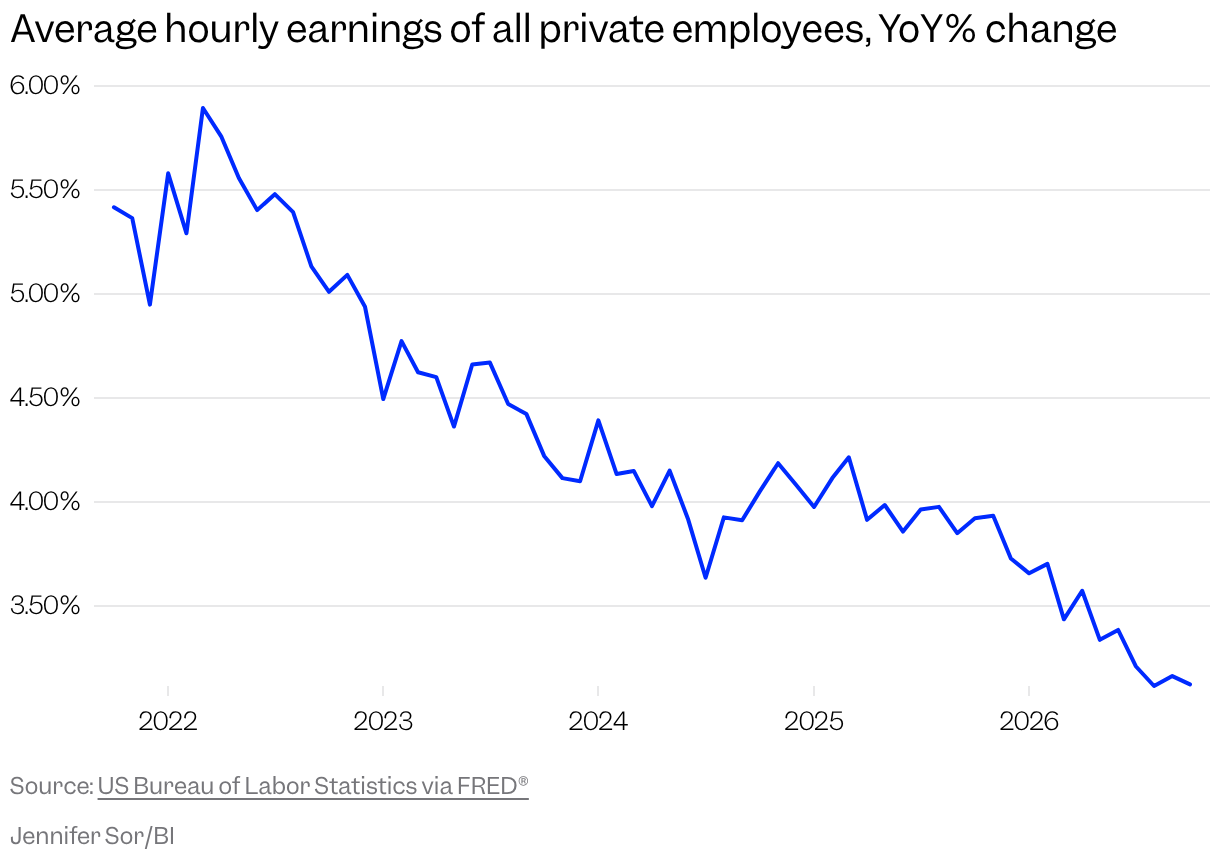
The bank estimated that “depressed” churn was weighing on yearly wage growth by around 0.3 percentage points. Wage growth has trended lower for most of the past five years, falling to a 3.1% yearly pace in October, according to the Bureau of Labor Statistics.
Churn has moved lower for decades, thanks to an aging workforce and improved matches between workers and employers, which means fewer employers have let go of workers and fewer workers are quitting their jobs compared to the past, Mei said.
The bank highlighted two reasons the drop in churn has accelerated recently:
The job-switching boom during the pandemic has died down.AI adoption is also reducing churn. Churn has fallen below pre-pandemic levels in sectors with higher AI adoption rates and greater potential to automate, Mei said.
AI is thought to have a negative impact on wages, as firms, in theory, could turn to the tech to lower labor costs, which drives down demand for workers in AI-exposed fields. AI adoption has already cut into the paychecks of the lowest-earning workers, with workers in the bottom quartile of earners seeing wages decline by 10% since 2023, according to an analysis from Apollo Global Management.
Goldman also flagged the potential for lower productivity growth as better matches between workers and employers are hindered. The ultimate impact could be lower “human capital accumulation” or wealth generation over time, the bank said.
Employees are more likely to hold onto their jobs today amid the tough hiring environment, a trend known as job hugging. The total quit rate has hovered around 2% in recent years, down from 3% in 2021, according to BLS data.
